Hypertension, also known as high or elevated blood pressure, is a disorder in which the blood vessels are persistently high, which can damage them. Every time the heart beats, it pumps blood into the vessels, which carry blood to all parts of the body. Blood pressure is the force exerted by blood against the walls of the vessels (arteries) as it is pumped by the heart. The higher the tension, the more effort the heart has to put into pumping.
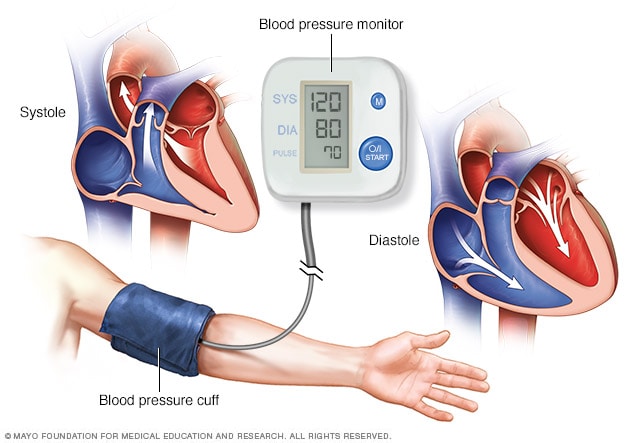
Normal blood pressure in adults is 120 mm Hg1 when the heart beats (systolic pressure) and 80 mm Hg when the heart relaxes (diastolic pressure). When the systolic pressure is equal to or greater than 140 mm Hg and / or the diastolic pressure is equal to or greater than 90 mm Hg, the blood pressure is considered high or elevated.
Most people with hypertension do not show any symptoms; for this reason he is known as the "silent killer". Hypertension sometimes causes symptoms such as headache, shortness of breath, dizziness, chest pain, heart palpitations, and nosebleeds, but not always.
Causes
Many factors can affect blood pressure, including:
The amount of water and salt you have in your body.
The state of the kidneys, nervous system, or blood vessels.
Your hormone levels.
You are more likely to be told that your blood pressure is too high as you get older. This is because the blood vessels become stiffer with age. When this happens, blood pressure rises. High blood pressure increases your chance of having a stroke, heart attack, heart failure, kidney disease, or premature death.
You are at higher risk for high blood pressure if:
Is african american.
Is obese.
He is often stressed or anxious.
Drink too much alcohol (more than 1 drink a day for women and more than 2 a day for men).
Eat too much salt.
You have a family history of high blood pressure.
Have diabetes.
Smokes.
Why is it dangerous?
The higher the blood pressure, the greater the risk of damage to the heart and the blood vessels of major organs such as the brain and kidneys. Hypertension is the world's leading preventable cause of cardiovascular disease and stroke.
Left unchecked, hypertension can lead to heart attack, heart enlargement, and eventually heart failure. Blood vessels can develop bulges (aneurysms) and weak areas that make them more susceptible to becoming blocked and ruptured. High blood pressure can cause blood to leak into the brain and lead to a stroke. Hypertension can also lead to kidney failure, blindness, and cognitive decline.
The health consequences of hypertension can be compounded by other factors that increase your chances of having a heart attack, stroke, or kidney failure. These include tobacco use, an unhealthy diet, the harmful use of alcohol, physical inactivity, and exposure to permanent stress, as well as obesity, high cholesterol, and diabetes mellitus.
How can it be prevented and treated?
All adults should measure their blood pressure regularly, as it is important to know the values. If this is high, they should consult a health professional.
For some people it is enough to change their way of life to control blood pressure, such as quitting tobacco use, adopting a healthy diet, exercising regularly, and avoiding the harmful use of alcohol. Reducing your salt intake can also help. For other people, these changes are insufficient and need to take prescription drugs.
Adults can contribute to treatment by taking prescribed medication, changing their way of life, and monitoring their health.
People with hypertension who also have high blood sugar, hypercholesterolemia, or kidney failure are at an even higher risk of having a heart attack or stroke. Therefore, it is important to have regular checks of the amount of sugar and cholesterol in the blood and the level of albumin in the urine.
What is the blood pressure monitor and how is it used?
A blood pressure monitor is a medical device, but also for domestic use, that helps prevent complications or serious health consequences for hypertensive patients. This device will help us measure systolic and diastolic pressure quickly and without the need to move from home.
A manual blood pressure monitor works by placing the cuff on the forearm. In this case it is better for someone else to take the tension. This person puts on the stethoscope and begins to press the knob. The cuff begins to inflate and exert pressure on the arm to a certain point (it is best to go up to 160 mmHg 2 in case the person is hypertensive. Afterwards, the person should gradually let the air escape from the knob, paying attention to the exact moment when you hear the first (systole) and last heartbeat (diastole), paying attention to where the mercury meter is going at that moment. It is a less precise and impractical method to perform at home (since it is more complicated to do it alone) Its use tends to be parked more and more.
A digital blood pressure monitor is much easier for one person to handle. And they are much more practical, fast and reliable, and they are the most used. The cuff is placed on the person's forearm, the device is turned on, and the button is pressed to turn it on. Then the systole and diastole results come out, respectively. Digital blood pressure monitors can be either wrist or arm.
Medications for hypertension
Many medications help treat high blood pressure. Each type works differently to lower blood pressure. For example:
ACEI, BRA and IDR
These three types of drugs to control high blood pressure work in a similar way:
They work with the "renin-angiotensin" system, responsible for increasing blood pressure.
Angiotensin converting enzyme (ACE) inhibitors
Angiotensin II receptor blockers or antagonists (ARBs)
In medical science, hypertension (like all pathological disorders) is of the utmost importance since in many cases it is latent and is not diagnosed by a doctor until it reaches a point of complicated treatment. It shortens the life expectancy of people, so that its treatment has a double objective; Even if mortality cannot be modified, at least the time of life with clinical disease, that is, morbidity, should be reduced.
Pulmonary arterial hypertension is characterized by increased pressure in the pulmonary circulation as a consequence of narrowing of the pulmonary arteries. It is a progressive disease that gradually overloads the heart.
In a CIBERES study led by Francisco Pérez Vizcaíno in 2018, a field of study was opened for new therapeutic possibilities.The correction of bacterial dysbiosis could have beneficial effects on the evolution of the disease. "Several therapeutic strategies can be used to restore the bacterial profile, including specific bacterial strains (probiotics), fiber or polyphenols that modulate bacterial growth (prebiotics), antibiotics, or even stool transplantation," says the CIBERES researcher.
The intestinal microbiota is the set of microorganisms in our intestine. In healthy people, the microbiota is made up of 100 billion bacteria, fungi and viruses, three times more than our own cells. With the development of massive genetic sequencing techniques and bioinformatic analysis, the study of the detailed composition of the microbiota has become an affordable task. In recent years, a very strong relationship has been found between the bacterial composition of the microbiota and health status. In general, a greater bacterial diversity, that is, a greater number of species of bacteria, is related to a better state of health.
The pathological alteration of the composition of the microbiota is known as dysbiosis. In both animal and human models, several diseases have been linked to specific changes in microbial composition. Among them are cardiovascular, respiratory, metabolic diseases, cancer and even psychiatric diseases. Dysbiosis is not merely a consequence of the disease, but plays a role in the disease process. Thus, the microbiota is capable of regulating our immune system.
Intestinal bacteria release various substances that can be absorbed by our body and exert positive or negative effects on our health. In addition, if the barrier function of the intestine is impaired, the bacteria translocate into the blood and chronically generate a state of low-grade inflammation.
Clinical case
64-year-old man with current Blood Pressure figures of 167 - 69 mm Hg
In these years, he presented as a maximum systolic blood pressure figure of 178 (73) (November 2004) and a maximum diastolic of 100 (December 2004).
Anamnesis by Apparatus
-Neurological: no headache, no dizziness, no instability, no decreased libido, no temporary focal motor / sensory deficits.
-Cardiovascular: no palpitations, no dyspnea, no fatigue, no chest pain on exertion, no edema, no intermittent claudication.
-Renal: no hematuria, no urinary tract infections, no colic, no nocturia, no polyuria, no trauma.
Personal history.
The patient reported daily walking and a low sodium diet, although in the last controls TA 162/70 and 167/69. You have gained weight in the last month.
He does not consume tobacco or alcohol.
Family background.
Mother dies at 64: ACVA + TA. No history of diabetes or hypercholesterolemia in the family.
-Abdomen: soft, depressible and without murmurs or megaly
-Neurological: normal
-FO: Grade II (localized narrowing and arteriovenous crossings)
Indications
The patient reacts positively to the indicated treatment which was to consume new medications for the regulation of blood pressure (Atenolol and Asaprol) along with this also maintain a calm rhythm of activities during the day, walk 3 times a day in short intervals of time and keep rest for after 10 days to carry out the corresponding evaluations to see how the applied treatment is developing.
Treatment results:
After 6 months, the patient returned to the consultation for his regular evaluations, in which he presented a normal heart rhythm (125-83) and a markedly better state of health compared to the previous visit, he reacted effectively to the applied treatment and did not there was a need for dose adjustment for their medication
Table of values of arterial hypertension:
Defense:
References:
1. New advances in the approach to pulmonary arterial hypertension through the intestinal microbiota [Internet]. Gaceta Medica. 2018 [Cited May 21, 2021]. Available in: https://gacetamedica.com/investigacion/nuevos-avances-en-el-abordaje-de-la-hipertension-arterial-pulmonar-a-traves-de-la-microbiota-intestinal-dh1669500/
2. Harvey A. McGehee, Johns Richar J. , Mckusick Victor A. TREATY OF INTERNAL MEDICINE-22 ED. Aravaca, Spain: McGraw-Hill, Interamericana de Espana; 1993.
3. Muiesan ML. Classification of office blood pressure a and definitions of hypertension [Internet]. ResearchGate; 2018. Available from: https://www.researchgate.net/figure/Classification-of-office-blood-pressure-a-and-definitions-of-hypertension-grade-b_tbl1_327227709
Mejías J. Hipertensión arterial, un enemigo silencioso. 1 de junio del 2021; La hipertensión, también conocida como tensión arterial alta o elevada, es un trastorno en el que los vasos sanguíneos tienen una tensión persistentemente alta, lo que puede dañarlos. Cada vez que el corazón late, bombea sangre a los vasos, que llevan la sangre a todas las partes del cuerpo. La tensión arterial es la fuerza que ejerce la sangre contra las paredes de los vasos (arterias) al ser bombeada por el corazón. Cuanto más alta es la tensión, más esfuerzo tiene que realizar el corazón para bombear. La tensión arterial normal en adultos es de 120 mm Hg1 cuando el corazón late (tensión sistólica) y de 80 mm Hg cuando el corazón se relaja (tensión diastólica). Cuando la tensión sistólica es igual o superior a 140 mm Hg y/o la tensión diastólica es igual o superior a 90 mm Hg, la tensión arterial se considera alta o elevada. La mayoría de las personas con hipertensión no muestra ningún síntoma; por ello...


Comentarios
Publicar un comentario